

OpenAI vs Anthropic: The Battle for AI Dominance Heats Up Amid Government Backlash
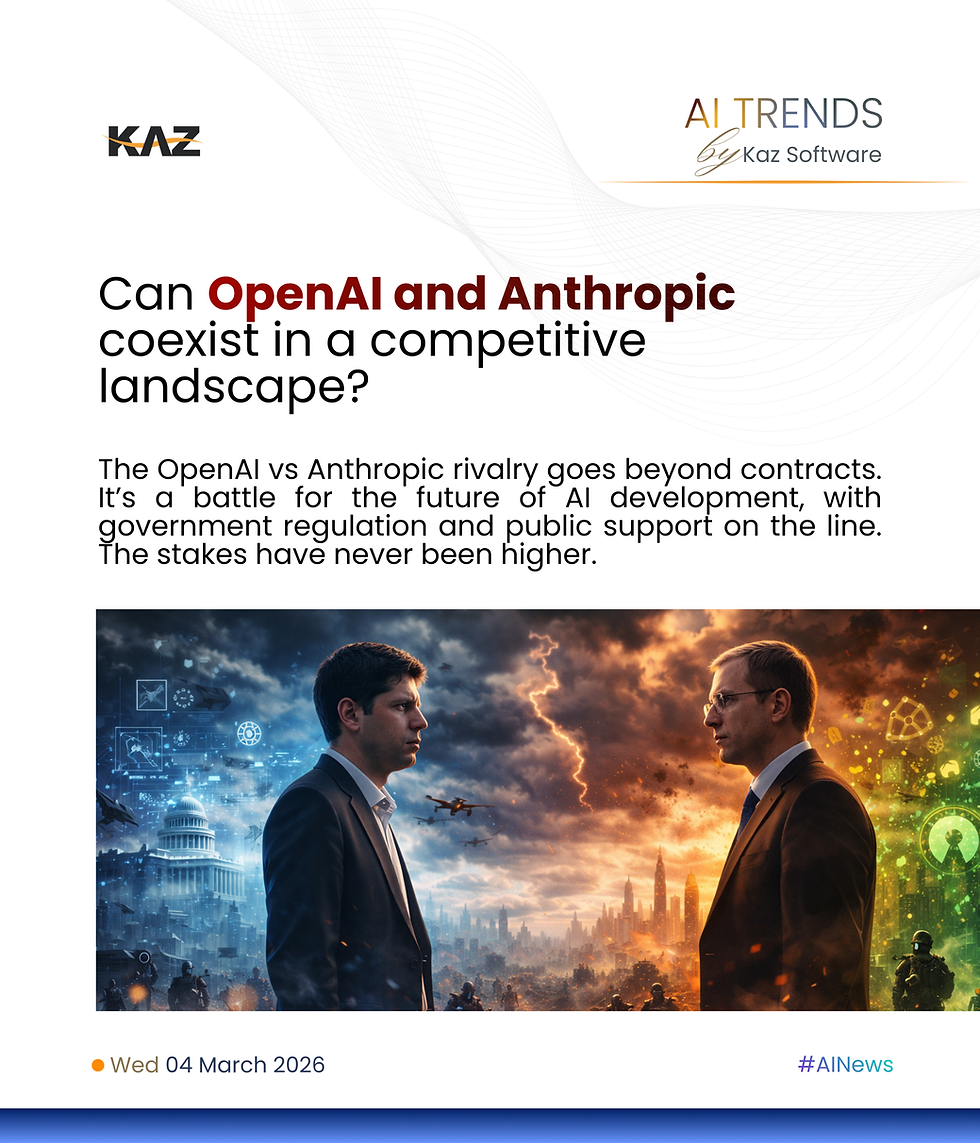
The OpenAI vs Anthropic rivalry is intensifying as both companies navigate the future of AI. With OpenAI securing government contracts and Anthropic gaining public favor, the battle for AI dominance extends beyond technology; it’s a question of ethics, regulation, and public trust. As government actions and consumer support shape the future of AI, the stakes have never been higher.
The battle between OpenAI and Anthropic escalates: government contracts, public backlash, and AI’s future
As of March 2026, the rivalry between OpenAI and Anthropic has entered a volatile new phase, centered on intense competition for U.S. defense contracts and contrasting approaches to AI safety and ethics. The tension between OpenAI and Anthropic has reached new heights, as both companies face significant challenges and opportunities in the rapidly growing AI market. Recently, OpenAI secured a major Defense Department contract, while Anthropic found itself in the crosshairs of the U.S. government. The department made clear it shares its commitment to ensuring its tools will not be used for domestic surveillance. To make its principles as clear as possible, they worked together to add additional language to their agreement. Treasury Secretary Bessent announced the termination of all contracts with Anthropic, citing concerns over national security and the integrity of AI products. Meanwhile, public sentiment has shifted significantly in favor of Anthropic, with widespread support emerging from developers, consumers, and even non-affiliated citizens. This rivalry is about much more than contracts or market share; it represents a deeper philosophical debate over the future of AI development, governance, and control.
OpenAI vs Anthropic: government and public divides over AI
The growing OpenAI vs Anthropic conflict is playing out on two distinct fronts: government contracts and public perception. OpenAI’s recent Department of Defense contract has raised alarms about the potential for private companies to influence national security. Secretary Bessent made it clear that the U.S. government is severing ties with Anthropic, labeling its products as a supply chain risk. But while OpenAI celebrates the Defense Department win, Anthropic is seeing unprecedented public support. Messages of support for Anthropic have been appearing outside its headquarters, with citizens expressing concerns over the growing corporate influence over AI technology. Katy Perry, along with numerous consumers, have shown a preference for Claude, Anthropic's flagship AI, which even dethroned ChatGPT at the top of the App Store rankings.
The power struggle: who will lead AI innovation?
At the heart of this rivalry is the narrative and right now, Anthropic appears to be winning that battle. OpenAI may hold the government contracts and defense partnerships, but Anthropic has garnered significant consumer favor. The general public, including developers, are becoming increasingly skeptical of OpenAI’s business model and its relationship with powerful government entities. Anthropic, on the other hand, is positioning itself as the more ethical and transparent alternative, with a stronger focus on AI safety and public accountability. Their open-source model and commitment to ensuring AI benefits humanity have created a strong connection with consumers. The growing support for Claude demonstrates that consumers are not just looking for powerful AI but one that aligns with their values.
AI in government: a new era of regulation and risk management
The debate surrounding AI regulation is heating up, especially with the U.S. government’s intervention. The decision to terminate Anthropic’s contracts has raised serious questions about the role of private corporations in shaping national security. Critics argue that AI companies like OpenAI and Anthropic wield too much power, and they fear that these companies could become too influential in guiding government policy on technology and security. The AI supply chain has become a central point of contention. With Anthropic now officially flagged as a risk to national security, questions about the ethics of AI and the security of these technologies are being raised across the globe. The actions taken by the U.S. government will undoubtedly influence future regulatory frameworks for AI development.
Looking ahead: what’s next for OpenAI and Anthropic?
The future of OpenAI and Anthropic hinges on their ability to adapt to an evolving landscape of AI regulation, public sentiment, and business innovation. OpenAI is capitalizing on its government contracts and expanding its footprint in enterprise AI, positioning itself as a key player in government-backed AI applications. Meanwhile, Anthropic continues to dominate in the consumer market, with a strong focus on AI safety and ethical practices, which resonate deeply with developers and end-users alike.
As both companies push forward with innovative AI models, their strategies diverge: OpenAI’s government ties could provide regulatory stability and funding, while Anthropic’s ethical focus may position it as a preferred choice for those concerned with AI’s societal impact. The next few years will determine which company leads the AI revolution. Will it be a government-backed tech giant, or a more ethically-focused challenger? The answer could reshape the future of AI development, regulation, and the way AI is integrated into industries worldwide.


