AI Isn't Taking Young People's Jobs. But It Is Changing How Careers Begin

One version says AI will unlock unprecedented creativity, productivity, and opportunity. The other warns of disappearing jobs, automated careers, and a future where machines outperform humans in many professional tasks. Neither story fully reflects reality.
As AI tools become embedded in education, hiring, and daily work, a more nuanced picture is emerging. Young people are not rejecting AI. In fact, they are among its most active users. Yet many are also expressing anxiety about what AI means for their future, particularly when it comes to learning, career development, and entering an already challenging job market.
Why Gen Z has a more complicated relationship with AI than anyone expected
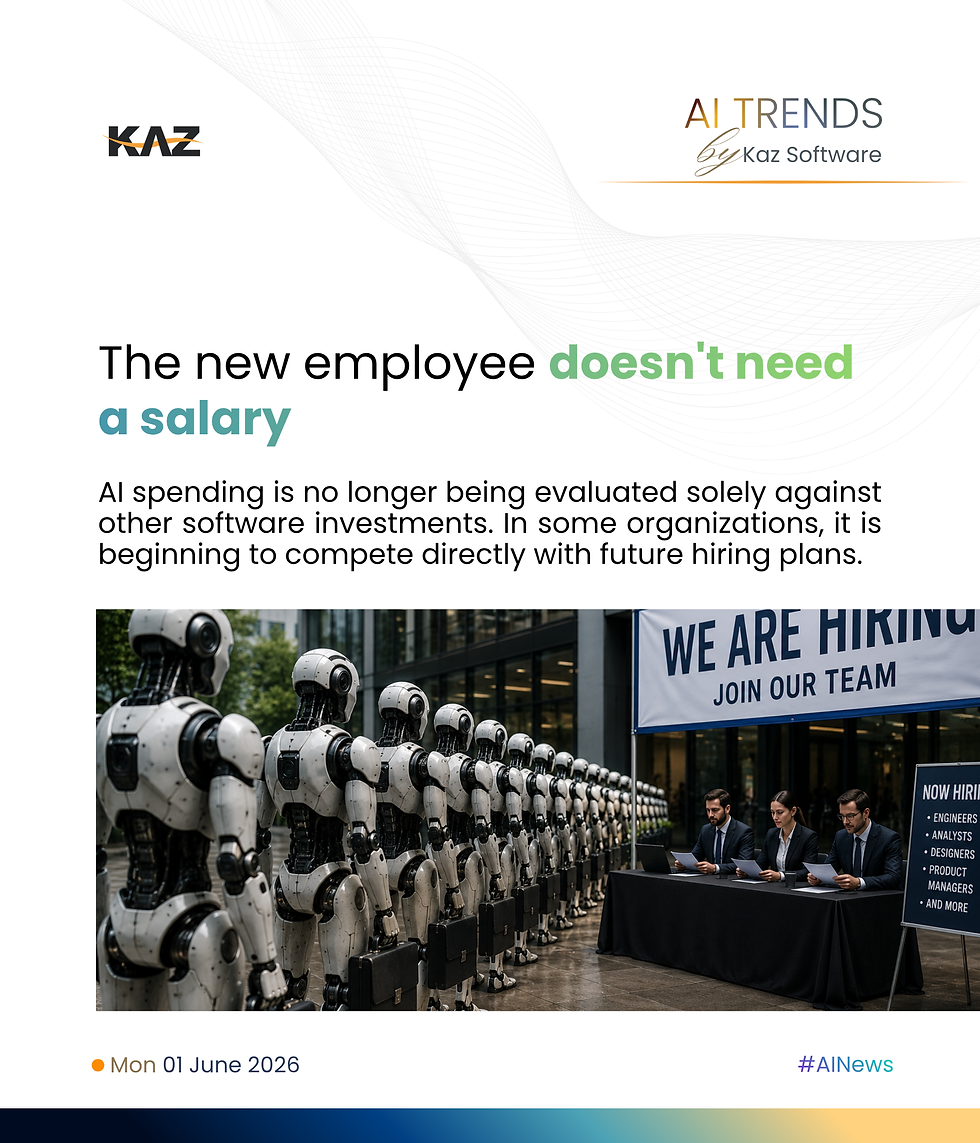
AI Isn't Taking Young People's Jobs: The popular narrative suggests that younger generations are embracing AI without hesitation. Many students and early-career professionals use generative AI tools every week. They rely on chatbots for research, writing assistance, brainstorming, coding support, and study preparation. Yet despite this widespread adoption, growing numbers report feeling uneasy about AI's influence on their education and employment prospects. One of the biggest concerns is not job replacement itself. It's the disappearance of the pathway that traditionally led to those jobs. Historically, careers were built through repetitive entry-level work. Junior journalists wrote stock reports. Junior developers fixed bugs. Junior researchers gathered information. These tasks were rarely glamorous, but they allowed people to build expertise while learning from more experienced colleagues. AI is increasingly capable of performing many of these foundational tasks. That doesn't necessarily mean companies will stop hiring graduates. What it does mean is that the traditional ladder into professional work may be changing. Economists have yet to find overwhelming evidence that AI is causing mass unemployment among young workers. However, certain sectors, particularly software development, are already showing signs of reduced demand for junior-level positions. At the same time, employers are increasingly looking for candidates who can work alongside AI rather than simply perform routine tasks. This creates a unique challenge for today's students. Many educational systems still prepare people for a world that existed before generative AI. Employers, meanwhile, are beginning to expect skills that education has not fully adapted to teach. The result is a growing mismatch between what young people are learning and what the workforce increasingly demands. Perhaps most importantly, the debate itself may be framed incorrectly. Several experts argue that AI should not be viewed as a replacement for human intelligence but as a tool that enhances it. The concern is not that AI will make humans obsolete. The concern is that people may begin outsourcing too much thinking to technology before developing the foundational knowledge and critical thinking skills necessary to use these tools effectively.
AI Isn't Taking Young People's Jobs: Why businesses must invest in human capability, not just technology
One of the most important lessons from the AI debate extends far beyond schools and universities. Technology alone does not create value; people do. Organizations often focus heavily on adopting new tools, implementing automation, and improving efficiency. Yet many digital transformation initiatives fail because they overlook the human side of technology adoption. The companies that succeed with AI are often the ones that invest equally in people, processes, and systems. Employees need visibility into how work is changing. Managers need better tools for training and knowledge sharing. Organizations need systems that help people make smarter decisions rather than simply automate existing workflows. This is where business software plays an increasingly important role. ERP systems, MIS platforms, and custom enterprise software can help organizations build environments where technology enhances human capability rather than replacing it. At Kaz Software, we see digital transformation as more than software implementation. The goal is to help organizations create systems that improve productivity, preserve institutional knowledge, support employee development, and enable better decision-making. Because the future of work is unlikely to belong entirely to humans or entirely to AI. It will belong to organizations that understand how to combine the strengths of both.